Tuesday, February 15, 2011

How to search the right car shipping company

Car Shipping
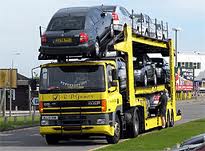
With the latest economic problem of the nation forcing people to find viable employment wherever they can, a lot of people end up accepting jobs in other states besides the one they are currently in. It is not amazing then that people from across the U.S. end up moving to another state because of better opportunities available  in other states. Moving your entire family to a new state, especially one that is far from the one you are in right now, needs a lot of planning and doing. One of the things you need to consider finding when you are planning your big move is a car shipping company or auto transport companies.

Why should you search yourself a car shipping company and why is it  essential that you find the right one? Some people do not realize that driving  few vehicles to a new area can be very taxing, more so if you own two or more vehicles. Having to move all of these vehicles by driving them from your current state to the one you are moving to can also be very expensive. The solution to this dilemma is to find a car shipping company that will transport your vehicles to your new home.


Searching the right car shipping company to hope your vehicles with may entail a bit of research on your part. Since there are a lot of auto transport companies who can easily offers to do the job for you, you might find yourself having a difficult time in choosing which one to go with. There are a few things you want to find out about these companies and what they tell you may very well help you in deciding which auto transport company to go with.


One of the things you will need to ask auto transport companies and probably one of the first questions you should get information on right away is how much they charge for the move. The prices these auto transport companies give you will vary and will depend on a certain factors. Some of these factors include how far your vehicles will have to be taken, whether or not these companies offer insurance, the kind of service they provides and how many vehicles are to be transported.


When choosing a car shipping company, you should know that cheaper does not always mean better. Try to ask around about these companies you are thinking of hiring before you do hire them. Check out the kind of insurance they offer with your vehicle move. If you are still unsure about these companies, ask for references. You should try to make sure that your vehicles are safe and secure when being transported to your new location. You should also find them in as good a condition as they were when they left their point of origin when you receive them in the new city or state you are moving to.


Atlast, auto transport companies do save you some money and help relieve you of the hassles and stress that accompany moving a few vehicles from one state to another. All you need to do is to make sure that they do get your cars there safe and sound as well.

Tuesday, February 1, 2011

SOUND OVER FOR Jan. 31

Sound Off
Thanks for concentrate

Thank you to all the well-wishers as I auditioned for “America’s Got Talent.” Now i can check that off my bucket list. They told us we’d hear around the end of February if we have made it to the second audition. I’ll let you know if I make it. Again, thank you all caring.

Something’s fishy

This is really what makes me tight-jawed. I acknowlegde a claim for loss of  subsistence and use. I’m an avid fisherman fishing on the average of two to three times per week. I have my boat and material, probably too much if you ask my wife. When I went to submit my claim they said without bills for purchased seafood I would probably be rejected. Hello, I don’t buy fish, I fish and I eat the fish I catch. If I don’t catch fish I just don’t eat fish. I’m sure that I am not alone in that way of thinking. I’m spoiled on catching my own Gulf seafood and I won’t buy any over the counter fish.

Too much risk

The paper has some good coverage of work by the business association in Hancock County, but the problem is homeowners’ insurance and how that is, and will continue to be, a drag on new business. Our $14,000 hurricane deductible means that we will sell and leave when our jobs are over. This financial risk is too much to have hanging over our heads. I’d like to know how many concerns and investors have decided to go elsewhere in the past few years after learning about the insurance situation.

There’s no guarantee

I had enjoy to reading the newspaper daily. It is the best learning medium of all. I am 72 and have learned even more than I did in school. All the Sound Offs about uninsured motorists are good, but not a guarantee to the inconsiderate uninsured vehicle operators. No matter what the state or anyone else tries, it won’t be a guarantee because the same goes, the unconsidered can cancel their policy. We still have to preserve ourselves and family.

What is essential

As an aside, it simply makes no sense to me what ever that we require everyone to have auto insurance when automobile transportation is not a life necessity while currently there is opposition to requiring everyone to pay into health care when we consider health care a life necessity. It is totally backwards. Auto insurance should be optional and let people take the risk of loss. If we do not have single payer health care like most developed nations, then health insurance should be required because our society has deemed that we cannot turn people away from necessary care.

Sunday, January 30, 2011

Seven More Organisation Recommend Transportation Plan

Transportation plan
The Northern Virginia organisation of Realtors and the Residence & Office Building Association of Metropolitan Washington have endorsed Gov. Bob McDonnell’s plan for funding more than $4 billion in road, rail and some other transportation projects across the state.
The groups were among seven business and transportation associations that announced their support for the plan previous week. The other association were the Virginia Auto Dealers Association, AAA Mid-Atlantic, Virginia Association of Roofing Professionals, Retail Alliance and Virginia Business Council.
Earlier, 36 organizations had recommended McDonnell’s plan.
The Republican governor’s proposal would need the state to borrow money to fund the transportation projects. Critics, notably Democrats, say they oppose the plan in part because they don’t like Virginia to go into debt.
Mary Beth Coya, senior vice president for public and government respond for the Northern Virginia Association of Realtors, said the group has been an advocate for more funding for transportation and that this is an initial step.
“Our members, the home buyers and the selling public that we serve spend too many valuable hours stuck in traffic. This is the time that could be spent with our families or being more profitable in our jobs,” Coya said.
The governor said his proposal would help Northern Virginia and other regions by fast up road construction, providing employment, easing congestion and boosting economic growth.
The proposal includes an employee tax credit for telecommuting and a tax incentive for companies that use water and rail, instead of trucks, to ship cargo.
McDonnell’s transportation plan would fund nearly 900 projects statewide. The plan would be funded by about $3 billion in bonds. Also, a 0.25% sales tax in Northern Virginia and Hampton Roads would be used for projects in that areas.
Democrats fear that diverting sales tax revenues to transportation will take money away from education and public safety. House Minority Leader Ward Armstrong (D-10th District) also said the governor’s bond proposal would “run up impressive amounts of debt.”
However, Coya said low interest rates make this a favorable time to sell bonds.
“We expect to see proposals in the future for new funding sources that will address the magnitude of our transportation problem without harming the resources we need for education and other key government services,” Coya said.

Thursday, January 27, 2011

'Talking' cars may alert of accidents and save lives

A new crash warning system that allows vehicles to "talk" to each other more than 900 feet away was determines for federal officials, marking a significant step in ability by the government to put advanced transmission technology in cars. 

Using WiFi signals that are transmit 10 times every second, the technology senses when a collision is imminent and alerts a driver through flashing red lights and beeps. 
 
In the demonstration in the parking lot near RFK Stadium, the driver notified by a system when it detected another car speeding through a red light in an upcoming intersection, of several cars blocking the highway ahead, and of a car zooming up from behind. 

The National Highway Traffic Safety Administration is send a report in October that such "vehicle-to-vehicle" warning systems could address nearly 80 percent of reported accidents that do not include drunk drivers. 

This technology is called as Peter Appel.It has the potential to save a lot of lives,administrator of the Research and Innovative Technology Administration at the Department of Transportation, after riding along for the demo.The technology, if successfully developed, could become mandatory in 2013 when federal officials are scheduled to decide whether to require such systems.
In the absence of such a specification, the first challenge may be overcoming a basic chicken-and-egg problem. If other person don't buy the systems, they will be nearly useless. In that case, persuading the first consumers to purchase the technology may be difficult. 

Implementation of the system would require the nation's automakers, to agree on how such systems should work and what kind of information they should share. 

Ford, which conducted Tuesday's demonstration for federal officials and the media, is expected to announce during this week's Washington Auto Show that it will invest more in the technology. The Department of Transportation has already spent more than $40 million on this technology, with an additional $36 million slated for more research.The government research and automakers is supposed to be finished within two years. 

The warning systems, however, face technical challenges.The WiFi signals between two cars are sent via a channel shared by the Federal Communications Commission. Engineers are trying to cope with "channel loading" when there are more than 100 cars within the 300-meter radius. 

There is some fear that hackers could fool the systems into thinking that others car are in the area - setting off alarms and snarling traffic. The automakers must ensure that the signals vehicles are receiving are actually from other cars. Setting up electronic certifications also has to be done in a way that addresses the concerns of privacy advocates and does not identify individual drivers. 

"We don't want people to feel there is some tracking device on the car," said Michael Shulman, a technical leader for the project at Ford. "But we have to make sure the other car you're sensing is not some guy on an overpass with a laptop. So there are obstacles, but we think we have ways of overcoming them." 

Some cars already have limited radar devices that can detect obstacles in the front, as well as those in the blind spots missed by mirrors. Such systems can cost $1,000. 

The advantage of the WiFi technology is not only that it is far cheaper - possibly adding as little as $100 to the cost of the car,but also that it can identify other vehicles much farther away and in all directions.The system's low price tag would allow manufacturers to put it in both luxury and economy models.

Monday, January 24, 2011

Goods transport revenue increase by 33.5% in pune

Goods Transport
PUNE: The Pune railway department has registered a significant increase of at least 33.5% in its goods transport revenue. As per the current statistics, the goods transport has fetched the division Rs 135.45 crores in the first nine months (till December 2010); this is significantly high compared to last year. The main reason for this growth in revenue is, increased transport of sugar, auto parts and fuel from Pune.

According to sources, "Earnings from goods transport have been increasing over the last few years, by at least 10% annually. Most of this is thanks to the increasing number of industrial units around Pune. Western Maharashtra being the hub of sugar production, the division has registered a significant rise in sugar transport this year.All industrial units prefers the rail transport as it is faster and safer compared to other way of modes."

An official with the Pune division said division is expanding its existing capacity, hence the goods transport can further increase in the coming years.

A proposal has been put forward for separate tracks with advanced facilities for loading and unloading goods at the Saswad goods shed. According to the officials, a time of slot of 9 am to 3 pm is allotted for  goods transport.

The statistics also suggest that the Pune division's passenger earnings have gone up to Rs 296.19 crore, an increase of around 17% compared to the last year. The division, till December 10, has registered a passenger count of 5.60 crore, around 7% more than last year. The total revenue of
division has reached up to Rs 457.24 crore.

The Pune division takes action against ticketless passengers across all its station. Till December, around 1.23 such cases were registered, earning the division Rs 4.79 crore. According to Pune division's public relation officer, "Around 88 holiday special trains and 73 special trains ran from Pune in the last 9 months".

Wednesday, October 20, 2010

Mazda refines lineup with SkyActiv technology


It turns out Mazda isn't simply shooting for the sky. Rather, the protagonists of zoom-zoom driving dynamics are taking an active approach to the brand's DNA: Put it all together, and it's called “SkyActiv.” Mazda is billing the suite of technologies as the pillars of its way forward.

Much of these features--which enhance future products in nearly all areas including engine, transmission and chassis--have already been revealed. But Mazda announced today that the SkyActiv name will be the banner it flies from now on.

The first car to get SkyActiv technology will be the Mazda 2, starting in 2011. Mazda is using SkyActiv features to fortify its product lineup as fuel-efficiency and lightweight cars becoming increasingly important in global markets. Here's a look at what's to come.

SkyActiv-G is perhaps the easiest to comprehend. It's an efficient, direct-injection gasoline engine (hence the G), that has a compression ratio of 14.0:1 without unusual knocking. Mazda says this is the highest in the world. Fuel efficiency is improved 15 percent.

SkyActiv-D is the diesel powerplant. It has the same compression ratio as its gasoline counterpart but employs a two-stage turbocharger. The engine improves fuel economy 20 percent.

SkyActiv-Drive is the slush box. It's Mazda's new automatic transmission that helps fuel economy by 4 percent to 7 percent.

SkyActiv-MT is for enthusiasts. Take a guess--what do you think the MT stands for? This manual transmission offers short, crisp shifts and aims to bring a sports-car feel to more mundane front-wheel drive, front-engined cars.

SkyActiv-Body Sounds like a hydrating soap, no? This offers high rigidity--to the tune of 30 percent more--and is 8 percent lighter.

The SkyActiv-Chassis improves handling while reducing weight 14 percent compared with the previous version.

Will all of this work for Mazda? If SkyActiv becomes as ingrained in the vocabularies of enthusiasts as zoom-zoom has, look out.

Thursday, October 14, 2010

BMW poised to add X4 to lineup in 2014

It was only natural. With the SUV craze decidedly downsizing, BMW appears set to add an X4--with a range-topping M version--as part of plans to expand its utility-vehicle lineup in 2014.

Conceived along the lines of the highly successful X6, the X4 is a smaller and more agile four-seater. Although it shares the same floorpan, drivelines, chassis and engineering hard points as the X3, the X4 is set to receive individual styling in a move to give it a more sporting image and enable BMW to position it higher than the SUV upon which it is based.

Those who have seen the latest design proposals suggest the X4 differs from the X3 in much the same way the X6 is removed from the X5, with a bullish front end, curved coupe-style roofline, four doors and heavily angled tailgate.
“The design is not finalized, but we know the direction and it will likely surprise,” a source told AutoWeek.

As with its larger sibling, the exterior design changes would make it less practical than its more upright sibling, with reductions in headroom and luggage capacity. But strong sales of the X6--it has easily beat sales targets announced at launch in 2008--have convinced BMW bosses that customers are prepared to forego everyday usability in the name of style.


BMW's rival to the upcoming small Porsche, expected to be called the Cajun, was first proposed by in-house designers in 2006. However, capacity concerns at Magna's factory in Graz, Austria, where the first-generation X3 was assembled, ultimately led BMW to postpone a decision on its future. Things changed when second-gen X3 production switched to Spartanburg, S.C.

Further investments to the Spartanburg factory have increased its capacity from a previous 160,000 to 240,000, providing the necessary scope for North American production of the future X4.

“With the move into North America we're able to take advantage of greater production flexibility,” a high- ranking BMW insider told AutoWeek at the recent Paris motor show.


While stopping short of confirming a definitive production approval for the new SUV, AutoWeek's source suggested it had the backing of the company's chief executive, Norbert Reithofer, who is expected to announce its addition to the lineup as part of BMW's plans to sell 2 million cars annually by 2020.
While the new X3 is aimed at strong-selling SUVs such as the Audi Q5 and the Mercedes-Benz GLK, the X4 will be targeted directly at the Porsche Cajun and an expected C-segment four-wheel-drive model from Alfa Romeo due in 2012.

Speaking about the Porsche Cajun, a BMW insider said: “This car is motivating our development department at the moment.”
North American market conditions are heavily influencing BMW's decision to bring the X4 here.

“We see this car competing in the same price bracket as premium wagons,” a source said. “We think it will appeal particularly to U.S. car buyers.”
The X4 is expected to come with a choice of four- and six-cylinder gasoline and diesel engines mated to a six-speed manual, a seven-speed dual-clutch or an eight- speed automatic gearbox. Like the X3, BMW does not plan a two-wheel-drive option.

The X4 will use BMW's latest electronically controlled Dynamic Performance Control system, providing an individual proportioning of power to each rear wheel dependent upon prevailing traction.

Sitting at the top of the lineup will be a performance-orientated X4M model boasting styling upgrades, a future twin-turbocharged inline six-cylinder and a seven-speed DCT dual-clutch gearbox from the BMW M division.

The X4's double-wishbone (front) and multilink (rear) suspension will be tuned to deliver more engaging handling than the X3, with a lowered ride height, reduced wheel travel, uprated antiroll bars and unique spring and dampers, the latter offering variable control.